§04 Dev & Infrastructure
Streaming at Scale: CDN Strategies for Low-Latency Interactivity
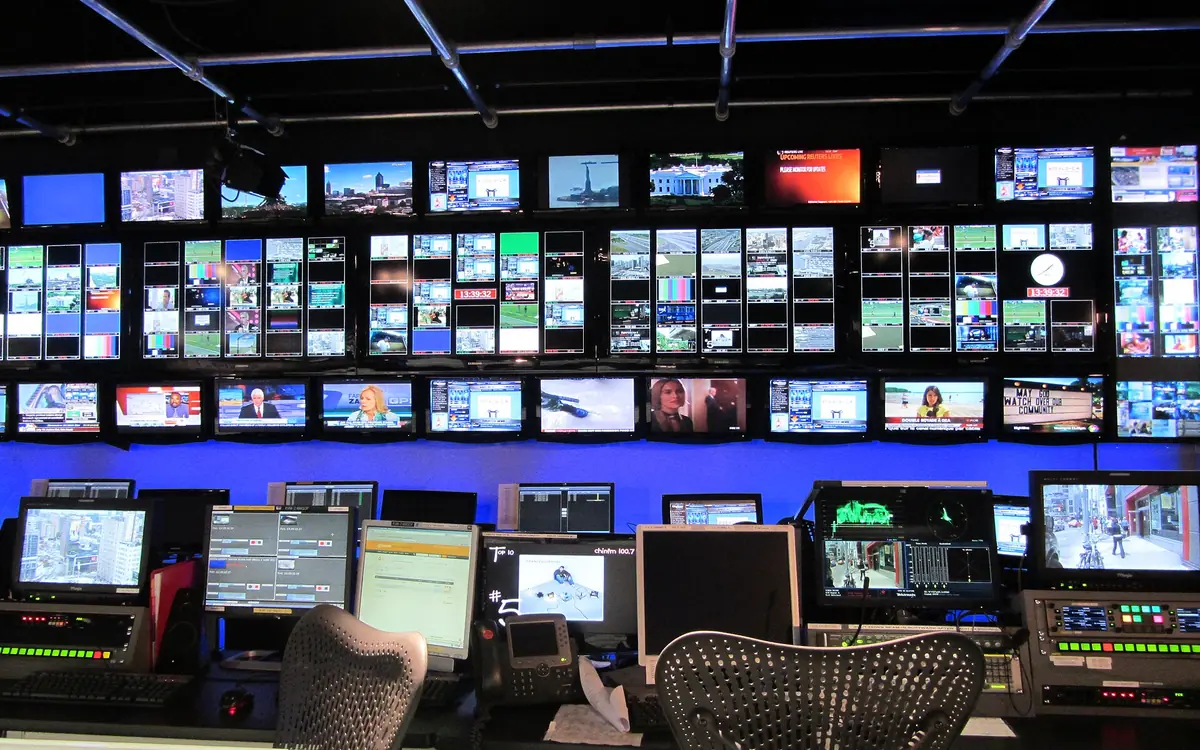
City tv control room Doors Open Toronto 2012 / Loozrboy from Toronto, Canada, CC BY-SA 2.0
What it really takes to keep glass‑to‑glass under a second when a million people tap “Vote now.”
Cold open: the minute the chat went red
Kickoff time. A push goes live. One host says “Vote now,” and the counter for active sessions jumps like a fire alarm. The chat floods. The player metric for join time spikes. A few regions show drift. We cut GOP size, nudge cache keys, warm a second shield, and flip HTTP/3 on more edges. The graph cools. Viewers don’t see the war room. They just see the goal, the poll, and that their vote lands fast. This is what scale feels like: small, sharp moves that keep latency inside a tight budget, while traffic surges by 10x.
Field notes: the latency budget, unpacked
Think in a budget. Glass‑to‑glass is the sum of: camera sensor → encoder pipeline → packaging (segments or chunks) → CDN hops → player buffer → decode → render. You cannot fix physics, but you can trim each step. If you shave 150 ms in three places, you win close to half a second.
Network time hurts most when it varies. That spread (jitter) forces the player to keep a small safety buffer. It helps to build a feel for understanding network latency: RTT, loss, and BDP shape the real floor for your stream, not just “speed.”
Key words to track in dashboards: join latency (first frame to user), live edge (distance from live), drift (how far viewers spread), buffer occupancy, dropped frames, and player stalls. Run a “glass timer” test rig: clap slate on camera; stamp time on screen; read that in the player with OCR or manual marks; log the delta. Do this on Wi‑Fi, 5G, and a weak DSL link. Repeat after each change. Measure, then move.
The big misunderstanding
Low latency is not one setting or one magic protocol. Interactivity is a state sync problem with a video problem wrapped around it. You can push 300 ms video with WebRTC and still have slow votes if clocks drift or chat fanout lags at the edge. Or you can run LL‑HLS at ~2 seconds and deliver crisp polls if your state hits users in under 200 ms and players stay near the live edge. Pick tools by use case, not hype.
Protocols, scale, and what they are good at
Here is a quick, practical view. Numbers are typical in the field, not lab bests. Your dev, encoder, and CDN plan will shift them.
| LL‑HLS (CMAF) | 1.5–3.5 s (well‑tuned) | 1M+ | High (HTTP cache, chunked) | iOS native; web via hls.js; CTV broad | Polls, quizzes, light betting | Medium | Lower egress per viewer | Supports SSAI; DVR ok; great reach |
| DASH‑LL (CMAF) | 2.0–4.0 s | 500K–1M+ | High (HTTP cache, chunked) | Web/Android strong; CTV broad | Polls, auctions (soft real‑time) | Medium | Similar to HLS | Flexible manifests; good ABR control |
| WebRTC | 0.2–0.7 s | 10K–100K+ (with SFUs) | Low (not cacheable) | Web/mobile native; CTV mixed | Real‑time talk, gaming, tight betting | High | Higher infra and people cost | Use for “control plane” or VIP tiers |
| SRT (for ingest/distribution) | 0.5–2.0 s (path‑dependent) | Feed fan‑in/out | N/A for browsers | Encoder/origin only | Stable ingest over lossy links | Medium | Modest | Great between venue and origin |
| WebTransport / WebSockets | 0.05–0.3 s (state) | 1M+ events via edge fanout | Medium (no cache, but edge compute) | Web/mobile; CTV varies | Chat, votes, odds, control | Medium | Low data cost; some compute | Pair with HLS/DASH for video |
Apple’s Low‑Latency HLS specification explains how preload hints and partial segments cut wait time without breaking caches.
The DASH‑IF low‑latency guidance covers CMAF chunks, player buffer logic, and drift control in detail.
For sub‑second, the WebRTC standard is the workhorse. It shines for talk‑back, auctions, and games, but it needs SFUs and careful ops to scale.
Decision path: how to pick a protocol mix
Start with the action, not the stream:
- If users must talk back or see a wheel stop in sync, add a WebRTC tier for those who interact; send the rest LL‑HLS/DASH.
- If you need DVR or pause/rewind on TV apps, LL‑HLS or DASH‑LL win because they cache and they reach more devices.
- If the main app is mobile or web and you need under two seconds with scale, LL‑HLS (CMAF) is the safe base.
- If you run markets (odds, bids), use WebSockets or WebTransport for state fanout. Keep state and video on separate rails.
If you are new to LL‑HLS, Fastly’s primer, what is low‑latency HLS, is a clear overview of moving parts.
Want one more neutral read before you commit? This low‑latency live streaming primer maps options and trade‑offs across the stack.
CDN building blocks that actually move the needle
Transport: enable HTTP/3 where your CDN supports it. QUIC reduces head‑of‑line blocking and often cuts tail times on lossy mobile. But test per region; some networks still proxy or shape new transports.
Protocol notes: see QUIC (RFC 9000) for why loss recovery and multiplexing help small chunks arrive smoother.
Shielding and tiers: put an origin shield in one or two stable regions to stop thundering herd on the origin. Many CDNs document this; here is a good walk‑through on origin shielding best practices. Add tiered caching if your vendor offers it.
Partial object caching: LL‑HLS/DASH with CMAF sends small chunks. Cache them. Prefetch the next chunk when the preload hint arrives. BBC R&D has solid field notes on chunked CMAF: low‑latency CMAF insights.
Coalescing: make sure the CDN holds back parallel requests for the same partial object so only one hits the shield/origin. This helps a lot at the live edge.
Auth that caches: use signed URLs or tokens that sit in the query string, not in a header that breaks cache keys. If you must vary by user, limit it to manifests, not segments.
Edge compute for surge control: add simple rate caps and backpressure on state channels at the edge. Use edge KV or pub/sub to push small state blobs (chat, odds, poll close times) near users.
Connection hygiene: TLS 1.3 helps; 0‑RTT can help on reconnects, but watch replay risks. Keep long‑lived connections for state, short for media. Re‑use connections (coalescing) across hostnames when safe.
Cache and delivery examples
The interactivity path: state, not just video
Most “live” features are state: a vote, a chat line, a bet slip, a timer. Treat state as first‑class. Run it on WebSockets or WebTransport, not inside your HLS/DASH manifest. Keep payloads small. Stamp messages with server time.
At the edge, keep a light coordination layer so you do not push all state from a far region. A good mental model is “objects” that live near users and hold room state. See Durable Objects at the edge for one way to do this.
If your browser mix allows, test WebTransport overview. It brings QUIC to app level and can do uni‑ or bi‑directional streams for control lanes.
Clock sync matters: pin a stream time source (NTP or CDN time). Send periodic “now” beacons in state channels. Clients can compute drift and nudge playback speed by ±0.5% for a few seconds to re‑align.
Encoder and player tuning that save seconds
Encoder: use a short GOP (1–2 s) and chunk duration around 200–500 ms. Avoid B‑frames if you chase sub‑second. Set your ladder by network class (mobile vs TV). Limit the number of renditions to cut startup logic. Keep audio in sync and in small chunks too.
Player flags matter. In web players like hls.js, enable LL mode and tune backoff and target latency. The docs for low‑latency in hls.js show the key flags.
On DASH, Shaka has guides for low delay. See low‑latency playback in Shaka Player for buffer goals and drift tricks.
Startup: prefetch first partial segments at the edge; keep the first video chunk small; delay heavy plugins like SSAI until after first frame if you can. For ads, consider server‑side ads on VOD and client‑side for live if latency is king.
Player snippet (conceptual)
Cost and scale math (a sanity check)
Do quick math before you promise sub‑second at stadium scale. Peak joins per second set your handshake load (TLS + manifest fetch). Chunk rate sets request QPS (e.g., 300 ms chunks ≈ 3–4 requests per second per viewer). Fanout on state can dwarf video calls during big moments. A useful industry view on running media at internet scale: media delivery at scale (Google Cloud Media CDN).
Budget lines: egress per viewer per hour, per‑region overage, and SFU compute if you run WebRTC. Often the best ROI is hybrid: 95% of viewers on LL‑HLS; 5% on a WebRTC “interactive tier.” That keeps your edge hot, your origin calm, and your finance team friendly.
Micro case slices
Live sports
Fans hate spoilers. For mass reach, run LL‑HLS/DASH with CMAF. Drive polls and stats over WebSockets. Pin clocks so both video and state line up. Use “predict ahead” timers so a vote closes a hair before the on‑screen event.
Live dealer casinos and in‑play betting
Here, trust is brittle. If the wheel stops and odds or bet windows feel off, users leave. Many teams pair WebRTC for the table cam with LL‑HLS for watchers. Odds, limits, and settle events go over a separate state lane at the edge. To learn how users judge fairness and pace, neutral review sites help. A good example is the US online casino guide at BestBonusBets.com, which maps user expectations for live games, payouts, and app UX. Use that kind of benchmark when you set your latency targets and UI copy.
Classroom Q&A
Two seconds feels live enough if chat lands fast. Use LL‑HLS with small chunks. Let hosts see hands raised over WebRTC or a back‑channel. Keep DVR so late joiners can catch up. Keep captions in small blocks to match the pace.
Failure modes and a small playbook
Common breaks:
- NAT/CGNAT that kills long connections: add fallback to polling or short‑lived sockets; retry with backoff.
- Player drift: send server time beacons; allow a micro speed change to re‑sync.
- Segment boundary glitches: align audio/video; set encoder to keyframe on exact chunk marks.
- Mobile handoffs: prefer HTTP/3; resume on network change; keep a small back buffer.
- BDP mismatch: right‑size initial window; avoid too many tiny requests without coalescing.
Watch and score QoE, not just logs. ITU has a standard that ties quality to metrics: ITU P.1203 for streaming QoE. Track p50/p95 glass‑to‑glass, join time, stall count, and live edge offset per ASN.
Launch and operate checklist
- Synthetic tests per region: DNS, TLS, HTTP/2 vs HTTP/3, partial object fetch.
- RUM in player: send join, live edge, buffer, and error tags with device and network type.
- Edge hit ratio and request coalescing rate on partial chunks.
- Origin shield load under surge; failover plan tested.
- Clock sync: NTP health; drift alarms; player catch‑up rules.
- State lanes: backpressure rules; rate limits; fanout per node; retry logic.
- Security: token TTL vs cacheability; hot key tests on manifests.
- Rollback: fast switch for transport (H2/H3), feature flags for LL, ad fallback.
FAQ and quick myth checks
Can I do sub‑second on CTV? Sometimes, but device stacks vary. Aim 1.5–3.0 s with LL‑HLS/DASH for wide CTV reach.
Is HTTP/3 always faster? Often on mobile or lossy paths. Test per ASN; keep H2 as a fallback.
WebRTC or LL‑HLS? If users must react in under a second, add WebRTC. For mass reach and DVR, LL‑HLS/DASH.
Do I need SSAI with low latency? It adds work. Try client‑side ads for live if every 500 ms counts.
Is SRT a delivery tech? Great for ingest between venue and origin, not for browsers.
Can I keep buffers at zero? No. Keep a small, stable buffer to ride out jitter without stalls.
TL;DR and next steps
Low latency at scale is a system, not a switch. Use LL‑HLS/DASH for reach and cost. Add WebRTC where true real‑time matters. Keep state on a separate, fast lane at the edge. Turn on HTTP/3, shielding, and partial caching. Tune encoder GOP and player buffers. Measure glass‑to‑glass, not just network. Start with a hybrid plan, then push down the budget step by step.
Next: turn this page into action. Copy the checklist, set target numbers per region, run your glass timer tests, and ship a canary to 1% of traffic. Learn, trim, repeat.
Author
Alex K. — streaming engineer and CDN architect with 10+ years in live sports, e‑learning, and interactive gaming. Led LL‑HLS and WebRTC rollouts to 1M+ viewers. Built player telemetry and glass‑to‑glass test rigs. Reach out on LinkedIn for deeper notes and diagrams.
Last updated: 2026‑06‑13