§04 Dev & Infrastructure
CDN and Edge Computing: Reducing Lag for Real-Time Sports Betting
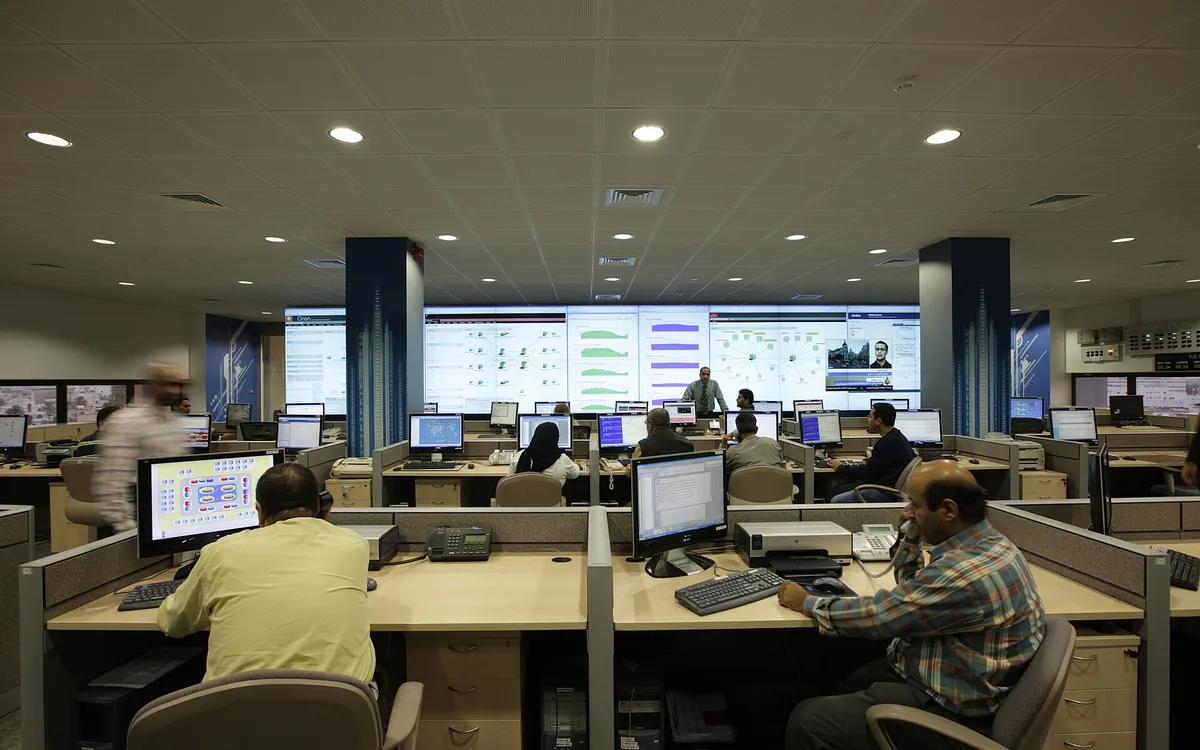
Batelco Network Operations Centre (NOC) / Masdestructive, CC BY-SA 3.0
Ninety milliseconds can flip a match. A winger breaks free. The live price should swing. But your stream trails. Your odds API stalls at the worst time. Sharp users get in first. Your risk desk sees red. The fix is not one silver tool. It is a path: tune the network, move compute closer, pick the right stream tech, and cache what you can. This guide shows what works, what to measure, and how to ship wins in weeks, not months.
A quick story from the pit
It was a derby night. Our p95 for odds reads spiked from 180 ms to 420 ms just as the crowd roared. Cashout calls hit locks. Traders paused markets. The loss was not from uptime; it was from lag. Later, we saw it: TCP slow start, a long path to origin, and a stream buffer set too cozy. We did three small things and cut the pain fast. This article is that playbook.
Why lag hurts both money and user trust
Live betting is a race. The house and the user watch the same event, but not at the same time. If your app is late by even 300 ms at p95, you take bad risk and give bad UX. Users will tap hard. They will see “price changed” pop-ups. They will churn. The goal is not zero lag. The goal is stable low lag at p95 and p99 under load.
If these words feel new, start with network latency basics. Then map your own path: user device → last mile (Wi‑Fi, 4G, 5G) → ISP core → CDN or edge → origin API → odds feed or data vendor → trader tools. Each hop adds delay. You can trim many of them with clear steps.
Where the time goes: a map of lag
There are two flows in play. First is data: odds reads, market lists, fixtures, bet writes, cashout calls. Second is video: the live stream. They move on different rails, but users judge both as “speed.”
Video first. Glass-to-glass delay is often 2–8 seconds on old HLS and DASH. New tech helps. But real stadium noise and TV sync make users notice even small gaps. Ofcom breaks this down well in its note on live streaming delay. On your API side, the map is shorter, and thus more fixable. You can pull the odds API to a nearby point of presence. You can cache parts of the data. You can cut handshakes and head-of-line pain.
If you do not have a CDN yet, read a solid Cloud CDN overview to get terms right: POPs, cache keys, TTLs, and shield. It will help you plan which calls are safe to cache and which must pass through.
CDN, Edge, MEC, and “just the cloud” — not the same thing
A CDN moves content closer and speeds up transport. It shines for GET traffic and assets. Many CDNs also let you run light code at the edge. For grounding, see Akamai’s edge computing guide.
Edge compute runs logic near the user. It can shape odds reads, fan out updates, or block bad traffic early. It can hold warm state for hot games in a city. It is not a full data center. Keep writes and truth in regions you can control and audit.
MEC (Multi‑access Edge Computing) sits inside the mobile network, near base stations. Latency can drop into low teens or even single digits in the same city, if coverage is good. The standards body view is here: ETSI MEC overview. For a plain tech read, see this IEEE Spectrum explainer on edge.
Classic cloud runs in big regions. It is great for scale and storage. But distance adds round trips. For live events in spread-out markets, you want a mix: region for writes and truth, edge for reads and fan-out, and CDN for transport and cache.
What actually moves the needle
Here are moves that cut lag in the real world. They are small, testable, and safe if you roll out with care.
- Use QUIC/HTTP/3 for client traffic. It fixes head‑of‑line blocking and speeds loss recovery. It also helps with 0‑RTT on repeat connects. Read the base specs: QUIC transport (RFC 9000) and HTTP/3 (RFC 9114).
- Pick the right live stream tech. Low‑Latency HLS (LL‑HLS) is a good default for reach on Apple and web. See Apple’s LL‑HLS guide. For sub‑second paths (e.g., in‑stadium comps, VIP rooms, or trader tools), use WebRTC. It has cost and scale trade‑offs. Start with the MDN WebRTC overview.
- From camera to encoder, use SRT for tough networks. It keeps feeds steady over lossy links. See SRT protocol details.
- Cache what is safe in odds flows. Markets list, fixtures, and non‑price metadata are low risk. Use short TTLs and revalidate in the background. The rules live in HTTP caching semantics (RFC 9111) and the helpful stale‑while‑revalidate (RFC 5861).
- Add an origin shield to stop cache miss storms in big matches. Start with this plain intro: what is origin shield.
Two more tweaks matter a lot: request coalescing (collapse duplicate GETs in the same POP), and small payloads (gzip/br, and trim JSON). These are not shiny, but they pay back fast.
Proven patterns for sportsbooks
1) Edge‑accelerated odds reads, region‑based writes
Put read APIs on the CDN/edge with HTTP/3. Cache safe parts with SWR. Keep bet writes and cashout logic in the region to keep strong control. Guard with idempotency keys. Use a queue for bursts.
2) Hybrid streaming
Use LL‑HLS with 1–2 s parts for most users. Offer a WebRTC fallback for high‑value markets or in hotspots, like the stadium zone. Keep the player buffer small but not zero. Give users a clear “Fast mode” toggle with a short note on battery use and data.
3) POP‑by‑POP rollouts and feature flags
Turn on HTTP/3 one POP at a time. Try smaller LL‑HLS part sizes in one city. Watch p95, error rate, and rebuffer events. Roll back fast if needed.
4) MEC for matchday cities (if you can get it)
Place a light odds fan‑out and WebRTC SFU into MEC zones for big cities on derby days. It is not for all traffic. It is for peak hours in a few zones. See AWS Wavelength for one path to deploy.
The Latency Impact Matrix for Live Sports Betting
These are field‑based ranges. Your numbers will vary by ISP peering, device, and 5G coverage. Validate in your own tests.
| CDN only for static; APIs hit region | 15–50 (city), 40–90 (inter‑region) | Reads 350–700 / 500–900; Writes 400–900 / 600–1200 | TCP/TLS, HTTP/2 | No API cache | Origin region | Simple logs, easy audit | 1 | $ | Small books, early stage |
| CDN + HTTP/3 + SWR cache + origin shield | 10–35 (city), 30–70 (inter‑region) | Reads 150–300 / 220–420; Writes 320–700 / 450–950 | QUIC/HTTP/3 | TTL 1–5 s, SWR 10–30 s on safe data | POP or shield | Edge logs needed | 2 | $$ | Quick wins for busy games |
| LL‑HLS (1–2 s parts) + selective WebRTC | 8–30 (city), 25–60 (inter‑region) | Stream 1.8–3.5 s / 2.5–4.5 s; WebRTC 400–1200 / 700–1800 | LL‑HLS, WebRTC | N/A for stream; API cache as above | Player/edge POP | User consent, fair display | 3 | $$–$$$ | In‑play focus, TV sync needs |
| Edge compute for odds hydration + regional write funnel | 8–25 (dense city) | Reads 120–220 / 180–320; Writes 300–800 / 450–1000 | HTTP/3, gRPC internal | Compute + SWR + coalescing | POP ring fenced | Data residency checks | 4 | $$$ | Top leagues, high load |
| MEC for hotspot cities on matchdays | 5–15 (on‑net 5G) | Reads 100–180 / 150–260; WebRTC 300–900 / 500–1300 | HTTP/3, WebRTC | Short TTLs; hot sets only | MEC zone | Carrier + regulator input | 5 | $$$+ | Stadium zones, VIP, traders |
Quick wins: the second row (CDN + HTTP/3 + SWR + shield) often drops p95 for odds reads by 30–50% in days. Hybrid streaming gives a clear UX boost with low risk to core flows.
The “ladder” to real‑time
- Level 0: One region. TCP. No API cache. Old HLS. Works, but lags hard on big nights.
- Level 1: Anycast CDN for assets. TLS tuned. Basic WAF. Still no API cache.
- Level 2: HTTP/3 on. API cache with SWR for safe sets. Origin shield. Request coalescing.
- Level 3: LL‑HLS for most, WebRTC for select. Edge logic for odds reads. City‑level rollouts.
- Level 4: MEC for hotspots. Auto routing by real‑time metrics. Fast rollback.
Compliance and trust sit in the front seat
Licenses set guardrails. The UK regulator lists tech rules in its Remote Technical Standards. In the EU, privacy duties come from GDPR requirements. You must log bets, keep data in the right place, and show fair clocks. Edge and MEC do not change that. They add new places to watch.
Trust is also how users feel speed. Independent reviews often call out “stream delay” and “cashout lag.” A simple way to see where you stand is to read outside views. Sites like https://uudetkasinot.biz/ track what players see in the wild and can hint at blind spots you miss in lab tests.
Measure what matters (and how)
Do not chase average. Track p95 and p99 for key paths: pre‑login, in‑play browse, place bet, cashout, and stream join. Watch the four golden signals: latency, traffic, errors, saturation. The Google SRE book has a clear guide to monitoring distributed systems.
Check DNS time. A slow DNS or a bad anycast path can add 50+ ms. The APNIC blog has good posts on DNS and anycast behavior. Also record TCP vs QUIC connect times, TLS handshakes, and player buffer events. Keep device type and network (Wi‑Fi vs 4G vs 5G) on every sample.
Run this test drill next week
- Pick two cities and two POPs. Turn on HTTP/3 for 10% of users. Keep a clean control group.
- Cut LL‑HLS part size from 2 s to 1 s for 5% of users. Cap buffer to 3 parts. Watch rebuffer and join time.
- Enable SWR on markets list and fixtures. TTL 3 s, SWR 20 s. Add origin shield.
- Load‑test odds reads with and without SWR. Use a modern tool; the k6 docs show simple scripts.
- Trace DNS and connect times across top ISPs. Note bad peers and routes.
- Define clear rollback gates: +1% errors, +10% p95, or +0.3 s stream join → stop and revert.
- Write a one‑page post‑test memo with graphs, next steps, and owners.
Buyer’s notes for CDN and edge contracts
- Ask for POP maps by city, not just by country. You care about matchday cities.
- Check request collapsing for hot keys. It saves your origin on goal events.
- Ask how origin shield is placed and how many layers you can have.
- Test QUIC performance by ISP and device. Not all paths are equal yet.
- Get logs in near real time. You need POP‑level views to debug live nights.
- Push for SLAs that mention p95 latency for specific paths, not only 99.9% uptime.
- If you plan MEC, ask how they peer with carriers and where compute lives.
Reality checks and small traps
- “Sub‑second for all” is not real. Aim for steady p95 and honest fallbacks.
- WebRTC at scale costs more. Use it where value is high.
- Edge state is hard. Keep writes and truth in a clear region. Use short‑lived edge caches.
- Do not over‑cache odds. Cache metadata, not live price. Revalidate fast.
- Keep clocks in sync (NTP). Bad time makes audits and cashout logs messy.
FAQ
How do CDNs reduce latency in live sports betting?
They move content and some compute closer to users. With HTTP/3, request coalescing, short TTLs, and origin shield, they cut p95 for odds reads by a lot. They also speed TLS and route traffic on faster paths.
Do I need edge computing for real‑time odds?
It helps for hot reads and fan‑out. You can start with CDN cache and HTTP/3 first. Add edge logic once you prove a case on one or two flows.
WebRTC or Low‑Latency HLS?
LL‑HLS gives 1.8–3.5 s glass‑to‑glass for the mass. WebRTC can get near one second or less, but it costs more and is harder to scale. Use both, per use case.
What is a good p95 target?
For odds reads under load, 150–300 ms p95 is a strong target. For writes and cashout, under 700 ms p95 is a solid start, with clear error paths.
Your next moves
- Turn on HTTP/3 for 10% of traffic in one city. Measure p95 and errors.
- Add SWR to markets list and fixtures with a shield in front of origin.
- Test LL‑HLS with 1 s parts for a small bucket. Track join time and rebuffer.
- Share results with risk and product. Decide where WebRTC makes sense.
If you want a view from the market side, read independent reports that track “speed to market,” stream delay, and cashout lag. They give user‑side proof you can compare to your logs.
Appendix: field notes you can copy
Cache keys for safe odds reads: sport+league+event+marketType, user‑agnostic where lawful. Keep TTL small. Use SWR to smooth spikes. Collapse duplicate GETs per POP. For writes, keep idempotency keys on client and server. For stream, cap the player buffer and expose a “Low‑lag mode.” For DNS, use fast anycast and watch resolver time by ISP. Automate POP‑level rollouts with kill switches. Keep a weekly drill on rollback. Publish a short “what changed” note to support before every big matchday.
Numbers in this article are indicative. Your mix of ISPs, devices, cities, and 5G coverage will drive real results. Measure in the field. Learn. Then move one step at a time.