§03 Security & Privacy
Managing Secrets in a Small Project: A Staged Plan
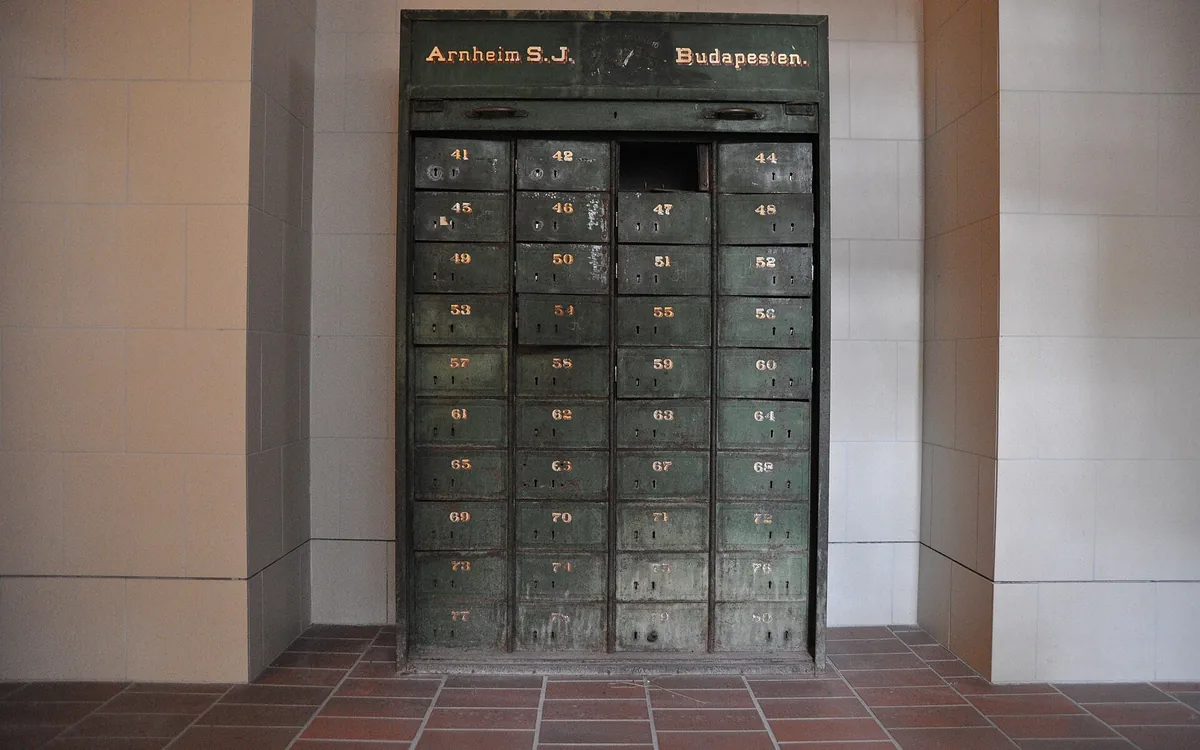
Budapest, Lukács fürdő, régi értékmegőrző / Christo, CC BY-SA 4.0
For most small projects, the biggest security concern is not having advanced defenses, but actively stopping the primary leaking points. From the first commit to well after the first deployment, unsecured or exposed secrets – from credentials to API keys and everything in between – are the early unconquered vulnerabilities in any project. Your default starting point: remove secrets from source code, avoid logging them, and split environments. Over time, managing secrets evolves from responder password management windows to ITSM credentials, from one-time operation flows to regularly rotated keys, and finally to a managed secrets platform once the operational complexity of controlling secrets yourself means it's time to centrally manage secrets. This staged progression, guided by one verified anchor point at each turn, keeps a small project secure without demanding a full vault up front.
1. Stop the Bleeding
The first priority: secrets do not belong hard-coded in your source, your logs, your command arguments, or your deployment artfifacts. Pipeline secrets go wrong constantly, whether left in shell history, retried in ransomware decryption commands, or just committed to the main branch by mistake. Harm here ranges from MySQL instances exposed in GitHub repos to sensitive information about attackers used in search ads for decaying sites.
Prevent this by scanning your repo, your logs, and your deployment scripts for secrets, searching there first before your managed secrets store for leaks. Use well-defined secrets management metadata and well-defined secret management workfows. Keep secrets out of your code, logs, and sensitive files by storing them in a centralized secrets management system and retrieving them only as needed, using environment variables or other secure methods.
Scan for secrets using secret management systems or by leveraging automated tools or infrastructure as code (IaC) can help to identify and remove sensitive information. Regularly review and revoke secrets that have been exposed or are no longer needed.
2. Split by Environment
Even a small project runs on more than one environment, and even the most basic uses of environment variables reveal the sprawl: separate APIs, databases, images, deployments, and probably even docs per environment, with separate credentials per role. An admin user and a developer's account may have the same repo, but separating them is more than an admin perk - learning least privilege teaches you the difference between edit-only, write-only, and full-keys. Granting admin access unnecessarily raises the potential risk of secrets leaking or being misused by someone who doesn't even mean to expose them. It also makes it harder to trace who added more secrets to the code base.
Additionally, secrets defined for one environment should not be reused in another. This includes repeating even small infosec rituals, like aping an Apache .htaccess line in your Dockerfile, and repeating rates of exposure in excess of sensible multiples. The other reason to avoid universal secrets is unlocking clear environments tiers with acceptable steps in how broadly you can expose your own secrets: you might open up your proofs of concept to all collaborators, share your test secrets with QA, but keep your live secrets tightly scoped to trusted operators.
3. Prefer Narrow, Short-Lived Credentials
Even on a small team, prefer stopping leaking secrets by making them one-time, automatically-generated, and shorter-lived over providing construction permisisons that would just send those demo credentials out to teams on the org chart.
At first, it might sound like you're trading easy automation of permissions within the team for securing verified sessions and checks off at every data use. But here's the difference: discussing timeouts, levels of elevation, and consent for each use of a secret narrows the scope more tightly than elevating everyone's role within Kubernetes to "owner". And it distinguishes managing versions of secrets from communication about each instance of secret use. If you only issue credentials that can ever expire, you communicate that fact _when issuing the credential_. But if an admin refreshes and reprovides any service, you communicate by outputting a pseudonymized secret. Managing the secret by installing privileges, even if it's only at elevated stages, communicates by sending read/write levels. And managing versions of identifying metadata makes you the captain, not the CEO, who signs off on security measures.
4. Rotate What You Can Manage
Even though rotating credentials regularly is a best practice for keeping your secrets secure, you need to strike a balance between security and usability. While it's possible to automate the rotation of secrets using scripts or tools, this only helps if you have a clear understanding of which secrets are in use, who is using them, and when they were last rotated. If you enter secrets management at this stage—setting records, however far merely in code or files, around what spans the actors and schedules of secrets—the hope is that you can later translate or transcribe these mappings, milestones, and monitoring points into more elaborate models, more intentional levers and fittings, and more durable distinction permissions thread by OSI levels and by functional subspaces. These objects can build out an ontology to replace 'env.EDCR' and 'vars' flags with a policies matrix, more failure injectors for log objects, maybe even a chromatography chart showing leak rates and temporal peaks for secret proxy techs.
Still, secrets management is not just about storing, managing, and rotating secrets. You must also make sure that the secrets are used in a secure way, especially if they are accessed programmatically. It's important to use secrets in a way that minimizes their exposure and ensures they are used only when and where they are needed. This can be achieved through proper authentication and authorization mechanisms, as well as by encrypting secrets during transmission and at rest.
5. Add Detection Before Platform Complexity
As your project grows, you may reach a point where you need to use more than infrastructure secrets to keep tabs on your application secrets. But the foundation for secrets detection tends to be a secrets management tool or suite, which scans repositories, logs, and build artifacts for leaked secrets. You can then revoke leaked secrets or limit their usage using detection. With more advanced logging and monitoring setups, you can even trace which user or machine accessed each secret, when, and from where. This helps in identifying potential security incidents and taking appropriate actions.
Additionally, detecting secrets by architecture segmentation involves isolating different parts of your infrastructure, such as different environments (development, testing, production), different services, or logical groupings. By segmenting the architecture, you reduce the attack surface and the potential impact of a security breach.
Remember, secrets detection is an ongoing process, and you should regularly review and update your detection mechanisms to keep up with changing threats and new secrets.
6. When the Centralized Manager Becomes Worth It
Even if you follow these best practices, managing secrets can become cumbersome as your infrastructure grows. Imagine manually keeping track of thousands of secrets across multiple environments, services, and users. This is where a centralized secrets management platform or industry solutions come in handy.
A centralized secrets management platform provides a single place to securely store, manage, and rotate secrets. It also allows for easy configuration and access control, making it simpler to ensure that secrets are only accessed by authorized users and for valid purposes. Additionally, a secrets management platform can provide automatic detection and reporting of security incidents or compliance violations, further reducing the burden on your team.
So, if you're managing a large number of secrets and finding it becoming increasingly difficult to keep track of them or ensuring they are used securely, it may be time to consider implementing a secrets management platform. While it may require some upfront investment and configuration, it can save you significant time and effort in the long run, while also providing enhanced security for your project.